Tuesday, 24 January 2023

Riveroak statement after Appeal was refused

RSP's statement is in black

Editor's comments in red

Steer report "Steer Assessment-of-the-value-of-air-freight-services-to-the-UK-economy-Final-Report-v22-Oct-2018-b-STEER can be downloaded from here


Manston: an airfreight hub for London & the Southeast

Manston Airport is a unique and important transport infrastructure asset. An illustrious history as a Battle of Britain airfield and an exciting future as a vibrant hub for international airfreight, delivering economic prosperity and employment across Kent and protecting a strategic aviation resource for the nation.

RSP’s proposals for the redevelopment of Manston Airport as a dedicated airfreight hub have now been approved by the UK Government as a Nationally Significant Infrastructure Project.

Once reopened, Manston will help the UK trade across the globe, importing vital and time-sensitive goods, including fresh fruit and medical supplies, providing air freight operators with a realistic alternative to the overcrowded London airports, easing the considerable road congestion caused by lorries carrying freight through the channel tunnel to European airports and improving resilience and boost economic growth and jobs in Kent.

Ignoring the very real increase in HGV movements along the Thanet Way onto an already overcrowded A2/M2 corridor and the QE2 Bridge across the Thames. As Manston isn’t connected to the fuel pipeline Aviation fuel will have to be trucked from the refinery at Canvey yet again adding to the congestion at the Dartford river crossing

Manston Airport is also unique in that it is deliverable; it will be ready to open its initial phase in less than three years.

Not a spadeful can be turned until the DCO conditions are complied with including the moving of the HRDF. There are a number of conditions that need meeting before development starts. Please read the DCO document pages 35-44. In all 24 conditions MUST be met.


 Upon opening it will:

Immediately absorb the increased demand for air cargo post COVID and Brexit and relieving capacity pressure on key London airports as they focus on passenger markets.

Provide an operating base for UK traffic currently lost to EU airports and create future capacity to meet global freight growth, adapting to changing market requirements using the latest technology.

When fully built, Manston will be able to handle in excess of a million tonnes of freight a year.

Very careful wording here, “will be able to handle” is light years away from “will achieve” in fact the Total tonnage of airfreight in the UK in 2019 (before Brexit and Covid) was 2535422 tonnes and 2020 and 2021 were 21% and 9.38% below that level.

The Development Consent Order – granted August 2022

The Government has granted the Development Consent Order because our plans for Manston are consistent with all relevant Government policies, including the Airports National Policy Statement, the Aviation Policy Framework, General Aviation strategy and Transport Decarbonisation Plan, and recognising the contribution Manston will make to resilience in UK’s under-pressure freight transport sector.

In addition, Manston will make a significant contribution to the decarbonisation of aviation and so is aligned with the Government’s 2022 Jet Zero consultation outcomes.

The Government-approved Development Consent Order provides consent for:

19 widebody parking stands

4 narrow body passenger stands 65,000m2 (750,000ft2) of cargo terminal

100 ha of non-aircraft pavement (247 acres)

57 ha (140 acres) of aircraft pavement 105,000m2

(1.1m ft2) of landside development

8 business aviation hangers

3 recycling hangars and aprons

Securing flight procedures for Manston

Before Manston can reopen, new air routes must be approved through an airspace change process set out in the Civil Aviation Publication (CAP) 1616. The process consists of seven stages and the Manston Airport proposal has already reached Stage 3.

But only after 3 years of work. Doesn’t bode well for the next 4 stages

RSP has developed a number of options for the flight procedures that will be required when the airport re-opens. These options will be subject to a full public consultation, which is currently programmed for early 2023.

Following this consultation, we will be able to submit our proposal to the CAA for consideration, with a decision expected during the course of 2024.

Why Manston?

1. The global air cargo market is growing

Ecommerce giants are transforming the air freight market, with their share of total sales reaching 25% very soon.

This is inspiring the growth of specialist freighter hubs. By way of an example, Amazon now has 85 aircraft with a further five on order and are expected to have 200 by 2028. In Europe alone, Amazon is making 38 daily flights serving eight cities.

But have recently withdrawn their aircraft from their hub at Southend and have stated they will truck goods in instead as cheaper

2. The UK is reliant on air cargo for economic growth and resilience

No it isn’t airfreight only accounts for ½ of 1% of all shipped tonnage with less than 1% annual growth over the last 20 years. In fact pure freighters atms have dropped by 50% in the last 20 years with the growth of bellyhold mainly at Heathrow.

Maximising international import/export, post-Brexit and post-COVID, is critical to the UK economy and the UK economy is increasingly reliant on airfreight to achieve this. Air cargo provides the immediacy that the UK relies upon for perishables, medicines and other time-sensitive goods

Dedicated freighters carry over 50% of the world’s air cargo. Airframe manufacturer Boeing forecasts global freighter fleet to grow more than 60% to 3,260 over the next two decades.

Boeing certainly do but their forecast for the UK market is less rosy.


Prior to COVID, more than £2 billion was lost to the London and Southeast England economy each year due to air freight diverted to Europe due to lack of capacity. Dedicated freighters could not find suitable slots anywhere in London and the Southeast – leading to 70% of freight flying belly hold in passenger aircraft.

This statement shows a complete lack of understanding how aircargo is managed. Also it should be apparent that during operations Manston would have been a closer airport than Liege (European aircargo hub) but nothing came to Manston despite its inactivity.

COVID has reinforced the cargo sector – and created a cultural shift that underpins the Manston strategy. One key observation from the COVID-19 crisis has been the importance of main deck freighters in airplane fleets and the global air transportation system. Freight use of passenger slots is unsustainable and inefficient, and many passenger airports lack air freight facilities.

Again a lie. Heathrow was the Premier airfreight hub (2/3rds of aircargo came through Heathrow in the belly of PAX) however with lockdown and the grounding of PAX much freight was directed on to pure freighters. Total aircargo dropped by 21% in 2020 due to this lack of capacity. However 2021 showed a partial recovery (only down 9.38% on 2019 levels) as PAX resumed.

In terms of the security of the UK economy, it is clear that cargo hubs can increase our resilience as an island nation: COVID-19 showed increasing critical importance of dedicated air cargo in protecting supply chain dependability.

3. Manston has capacity for growth

Manston has a strategically useful location by road, rail freight, air – and water. It has a full length, existing runway 2,748m (9,016 feet), capable of handling all widebody freighters and with a phased construction plan already developed it can be ready to open in under three years.

Manston has had these advantages ever since the War Department built the concrete runway 1945/46. I wonder why no hard headed business people have taken advantage?

In addition, it benefits from proximity to (but remains just outside of) London and Southeast airspace.

So is Southend where Amazon has just walked away from

The airspace over London and the Southeast is among the busiest and most congested in Europe – with the exception of the airspace over Manston. The London Terminal Manoeuvring Area (LTMA), west of Manston, handles aircraft using Heathrow, Gatwick, Stansted, Luton, Southend and London City airports – plus Biggin Hill and Farnborough airfields.

And Manston will add to if it ever they get granted a licence.

The airspace above Manston is much less congested, with aircraft at a much higher altitude. It also has capacity for significant future growth.

Airfreight – unable to access slots within the LTMA – is regularly trucked through the Channel Tunnel or via ferry to airports in mainland Europe to fly long-haul.

All 3 main airports for freight are well able to give slots to freight aircargo. That is Heathrow (Bellyhold is nearly back to pre-pandemic levels), East Midlands and Stanstead have space available.

 The challenges of Brexit have motivated UK importers and exporters look for alternatives to the practice of trucking through the Channel crossings to and from airports in Northern Europe.

Airfreight is still depressed, 2020 was down 20% on 2019 levels and 2021 down 9.29% on 2019. Trucking is still 4-5X cheaper than airfreight.

From 2025 they will instead be able to direct their business to Manston as the only airport offering substantial numbers of slots and capacity.

See above. This statement is wishful thinking

4. Other London and Southeast airports cannot handle the increased demand for dedicated freighters

Both EMA and Stanstead have stated they have capacity both now and into the future

Boeing categorises congestion in London airports as serious. The existing London airport runways will soon be back at capacity, and they are prioritising passenger traffic over freight movements.

Heathrow’s third runway was first proposed in 2006 but will take at least another decade to deliver

Stansted Airport has been granted consent to reduce cargo movements in favour of increased pax movements

Again this is a deliberate misuse of Stanstead’s reduction in aircargo ATMs. What they asked for is permission to change cargo for PAX as aircargo had failed to grow at the forecasted rate and had never reached 2/3rds of the allocated ATMs

Passenger traffic growth will absorb almost all UK runway capacity

Again this is a lie as 4 airports are currently unviable. That is Cardiff, Southend, Doncaster/Sheffield and Prestwick and have struggled to find new owners

Current closest alternative cargo airport with realistic capacity is three hours’ drive from the London M25 orbital motorway

Which is irrelevant as the main central warehousing for freight is centred on the “Golden Triangle” in the Midlands. Manston is 3 further hours away from this “Golden Triangle”.

In addition, there are extreme difficulties in obtaining planning consents for new airports in the UK. So the solution to the capacity crisis can only realistically come from an airport adjacent to, but outside of the London Airport system that is already built and can be ready to go quickly.

Like Southend

5. Manston will be built to be Carbon Net Zero

Aviation, and in particular the cargo sector, is not a luxury that the UK economy can live without and so it is incumbent on airlines, airport operators and governments to work together to protect its vital role in the economy, whilst simultaneously striving towards sustainability.

The Government has made it clear that it requires ‘high innovation’ of aviation to meet carbon reduction targets – something which we have willingly committed to delivering within the terms of the DCO, based upon the significant levels of investment, innovation and testing on alternative aviation fuels and technologies underway in the global aviation community.

The facilities at Manston will be built to make an active contribution to Government carbon reduction targets, with the aim that airport operations are Carbon Net Zero operation by 2035 through the use of smart and energy efficient buildings, the use of electric apron vehicles and autonomous vehicle technology to drive efficiency, the lack of airspace congestion above Manston and much more.

In addition, we are also exploring how we can best utilise the airport’s river connections into central London, the use of bio/synthetic fuel, hydrogen and charging for electric aircraft and whether we would be able to provide any renewable energy surplus to the local community.

Building a strong economic future for Kent

Manston will deliver sustainable economic growth and opportunity in a UK gateway region, supporting regional regeneration, inward investment and employment targets. By Year 5 we forecast 2,150 jobs on the airport site and 13,100 indirect/catalytic jobs.

RSP is meeting with a wide range of other potential partners and stakeholders across Thanet and East Kent to explore opportunities and develop partnerships that will bring additional benefits to local people from our commitment to reopening the airport.

The airport will provide focused training and career development for students and adult learners through progressive education and business partnerships, building on the work established by the Manston Skills and Employment Board (MSE-B) to ensure people from East Kent have the right skills to take the wide range of jobs that will be created by the reopening of Manston.

The MSE-Board considers the future employment and skills needs of the airport following DCO approval, from planning and construction through to operation.

The aim of the MSE-B is to ensure that Manston and associated businesses will have access to well-trained and experienced potential employees across a diverse range of skillsets. The MSE-B will do this by ensuring a comprehensive range of services are available to young people, job seekers and employers in the area around the airport.

In addition to RSP, the MSE-B membership currently includes representatives from:

Thanet District Council

Dover District Council

Canterbury City Council

Kent County Council

EKC Group

Canterbury Christ Church University/EDGE Hub

Kent and Medway Skills Commission

The Education People

Jobcentre Plus

Discovery Park

Thanet and East Kent Chamber of Commerce

Board representation is available to unrepresented local councils and business sectors.

Manston is the right solution, in the right location, at the right time


Appendix 1

Steer report 2017

“Market Analysis

Bellyhold cargo at Heathrow accounted for over 60% of total UK air freight volume in 2017, with forwarders and shippers utilising its extensive intercontinental passenger network. Over 30% of total air freight was shipped on US routes and most of the remainder on Asian routes. Freighter and integrator cargo is concentrated at East Midlands and Stansted, which, in 2017, together accounted for over 20% of all UK freight and the majority of freighter (60%) and integrator (79%) activity. Integrators accounted for over 90% of freight at East Midlands. At Stansted, integrators FedEx and UPS were the largest cargo airlines, although intercontinental freighters such as Qatar Airways, Cargolux and China Southern also accounted for a large share of volume.

In the last 15 years, aside from the decline in 2009 due to the fallout from the financial crisis, total volumes have remained relatively flat, growing with a compound average growth rate (CAGR) of +1.2% over the 15-year period with volumes only surpassing the pre-crisis peak in 2016.

North America was the largest destination market (accounting for 32% of volume), followed by Europe (25%, 18% of which was to the EU) and, South and East Asia (19%). Heathrow, and to a lesser extent Gatwick, handled predominately North American and Asian freight, benefitting from extensive passenger networks. The large European share of volume at East Midlands reflects the airport’s role within its integrators’ networks. Similarly, at Stansted, much of the freight volume is on European and North American routes.”

Trucked freight

2.24 Alongside the business models described above, a significant amount of air freight is transported in customs-bonded trucks between the UK and continental Europe and is classified as air freight with an assigned flight number. Freight is often flown to continental Europe, particularly from Asia, as there is often more available air freight capacity than to UK airports, partly due to lack of available slots for freighter aircraft at Heathrow. The freight is trucked as bonded freight to avoid having to undergo local customs procedures so that importers only need to deal with the UK customs authorities rather than investing in systems to deal with multiple customs authorities. This represents an inefficiency from the perspective of the UK economy as whole. See also the Case Study on consumer electronics imports at the end of this chapter.

2.25 In contrast to goods from Asia, Heathrow stated that goods destined for North America are also often trucked to the UK, in particular Heathrow, from continental Europe in order to take advantage of cheaper rates from the UK on North American routes. As Heathrow is the primary European hub for North American passenger connections, there is a significant level of bellyhold capacity available, which means air freight rates are cheaper compared to other European airports.

2.27 One notable feature of the UK air freight market is the huge importance of Heathrow and its surrounding freight facilities, with most forwarders having major consolidation centres in the vicinity of the airport, as noted in paragraph 2.19 above. Very significant volumes of air freight are trucked to such facilities near Heathrow, processed and then trucked to another airport, either in the UK or in continental Europe, without ever flying in or out of Heathrow itself.

2.28 Another common model is freight arriving from long haul origins (such as China or the US) flown into Heathrow and then being trucked to other airports (e.g. East Midlands) to be flown to continental airports overnight, leading to a symbiotic relationship between the different airports.

2.29 Both of these models mean that the resilience of the road network to and from airports is an important factor in reliability of service. To a large extent, they reflect the constraints on the UK air freight industry"


Sunday, 11 September 2022

Conflict of Interest

 A brief history of the South Thanet MP, Craig Mackinlay

Craig was born in North Kent on the 7th of October 1966 and stood for Parliament 1st in 1992 as an Independent and failed. He then joined the United Kingdon Independent Party (UKIP) and stood as Parliamentary candidate in 1997, 2001 and 2005 losing each time.

He then defected to the Tories in 2007 finally standing and winning in a hard-fought battle with Nigel Farage (then leader of UKIP) in 2015. He has kept the seat twice since in 2017 and 2019.

So why do we have a conflict of Interest.

To summarise: -

The rules on the registration of shareholdings require Members to register a shareholding if the Member's shares exceed 15% of the total shares issued or have a value of more than £70,000. Although the company had never traded and the shares were of only nominal value, the Member held in excess of 15% of the total and he was therefore required to include this interest in the Register of Members' Interests within one month of his election in 2015.

Why we have this rule in Parliament

“To provide information of any pecuniary interest or other material benefit which a Member receives which might reasonably be thought by others to influence his or her action, speeches or votes in Parliament, or actions taken in his or her capacity as a Member of Parliament”.

His excuse was: -

I am conversant with the rules for the registration of interests. I note under Threshold for Registration, paragraph 51(i) and (ii), clarified under paragraph 54 that these are not (i) and (ii) requirements, but are (i) or (ii) requirements. On the face of it, my shareholding - amount to 2 shares of 1 penny, being the entire issued share capital of the company would suggest a requirement to register under 51(i), however this would be a construction of the absurd in this instance. The company was formed on 4 April 2001 when I was pursuing, with outer, the potential for a low-cost airline operation. The idea progressed to a moderately advanced stage but literally fell apart, never to be resurrected again following the events of 9/11 in 2001, whereby for obvious reasons, interest in a new airline literally ceased in its tracks.

In the event Craig apologised for inadvertently misleading the house on 3 separate occasions. The 1st during his maiden speech to Parliament on the 28/5/2015 when he said


The 2nd was on 11/6/2015 when he responded as follows

That meeting then went ahead with the North Thanet MP Roger Gale

The 3rd took place on the 7/2/2018 as follows: -

As an aside to this support of Manston which takes the form of lobbying for Riveroak Strategic Partners (RSP), ostensibly on behalf of the people living in South Thanet, it does seem from a statement made during a fundraising BBQ for the Save Manston Airport Association (SMAa)

"We all remember that the DCO would have trumped whatever happened on that local plan, but the fear would have been that it had been re-designated away from aviation, it would have instantly inflated the value possibly to unacceptable standards in the future. That was my great worry, and we're out of that, so as Tony said, the EC4 designation of the airport (the old designation), while we have no local plan, still stays the same and is very powerful."

In other words, as the land at that stage was owned by Stone Hill Park, should RSP be in a position at a later stage to buy the 720 acres it may have cost RSP far more to purchase had it been designated mixed use.

The apology to the house took this form on the 20/6/2018

Craig's apology statement to his colleagues includes the words "It was an idea of its day (incorporated April 2001) and, following the tragedy of 9/11, it never came to anything, and plans ceased"

On the face of it one might wonder why a qualified accountant would keep a dormant company (4193829) on the books of Companies House for 17 years (now 21 years) with all the associated costs involved.
The company was set up in April 2001 with the following designations
51101: Scheduled air passenger transport
51102: Non-scheduled air passenger transport
51210: Freight air transport

In other words, mimicking the, at that time, the business plans of Wiggins, the owners of Manston under the control of Anthony Freudmann CEO.

Imagine my surprise when an archive Google search brought up the following link
This clearly indicates that far from "plans ceased" after September 2001 flights to Malaga were still being discussed. Further this comment includes a link to a website advertising MAMA Airlines which no longer exists however using "wayback" it shows the website still being active until December 2002

Clearly it states the following "London's newest airline will put the quality back into air travel with flights from the Southeast to Europe starting Spring 2003"

Maybe Craig just forgot however there could be an alternate reason. Manston as has been pointed out was run by Antony Freudmann on behalf of Wiggins. His CV is here 

He states that "Tony Freudmann also had the following to say regarding personal accusations thrown at him “I was responsible for Manston’s conversion to a civilian airport, building it up as a cargo airport and then being ‘let go’ when I protested that the EUJet plan made no economic sense.”

He ran Kent International from 1999-2005 during the time Craig intended to run MAMA Airlines Ltd so it isn't beyond the wit of man to think they worked together and of course despite the terrorist attack on the 11th of September 2001 Kent International didn't stop running flights.

What is clear is that there is a longstanding business link between Freudmann and Mackinlay dating back to at least 2001 and this Craig confirms during another fundraiser for SMAa on the 21st of July 2019 when during a speech he made the following statement,

"Well I’m sorry this is going to be the start of the regeneration and the renaissance of East Kent, particularly Thanet and that is why I’m so excited. I’ve been working with Tony (Freudmann) for many years, known him ……We go back quite a long way, even before this odyssey and I’m really pleased that this has come to pass, so we can turn the page, reassure the community that is going to work together for Thanet."

So, it is a legitimate question the electorate can ask: -

"Does Craig Mackinlay the MP for South Thanet have an ulterior motive in promoting RSP (Antony Freudmann)?"

This week (7th September 2022) the South Thanet MP has been promoting a petition as follows; -

"We note the previous spending of £10,000 of local Council taxpayer precept by Ramsgate Town Council to attach themselves to a prior judicial review action to prevent aviation activities at the Manston site. The Parliamentary Under Secretary of State for Transport has granted the Manston site development consent (a DCO) so that a new cargo hub and associated businesses can be advanced. The project is promoted by RiverOak Strategic Partners Limited and has long enjoyed the support of both Thanet MPs. Thanet perpetually has unemployment rates and average salaries behind South-East norms. A re-opened airport is expected to bring huge investment of hundreds of millions of pounds. This means new opportunities and a huge number of new jobs. The petitioners therefore request that the House of Commons urges Ramsgate Town Council to accept the decision of the Parliamentary Under Secretary of State for Transport, work constructively with the Government, RSP, Thanet’s MPs and other local authorities and elected representatives towards the re-opening of the airport, and to refrain from spending more public money on further legal challenges"

Clearly the statement in bold is politically motivated as Craig is a Conservative MP and the Ramsgate Town Council is a majority Labour Town Council however the statement is factually incorrect as the truth is there was a motion in Council which was debated, and a vote taken to give the judicial Review by Jenny Dawes £10000 towards appealing the decision of the SoS of the Department of Transport to grant a Development Consent Order (DCO) for the rebuilding of Manston for the following reason "I see Mackinlay doesn't explain the reason why the government did not defend the case & conceded. It was because they knew they would lose because the SoS acted unlawfully ..................The Defendant accepts that his decision letter dated 9 July 2020 (the “Decision Letter”) did not give adequate and intelligible reasons to enable the reader to understand why he disagreed with the Examining Authority Report on the issue of need for the development of Manston Airport.
The lack of adequate reasons in the Decision Letter rendered the Secretary of State’s decision dated 9 July 2020 to make the Manston Airport Development Consent Order 2020 (the “Manston DCO”) unlawful.

However, it is perfectly legal for Local Councils to utilise their funds in protecting the electorate as an example several councils put their money together to appeal the decision on Heathrow's third runway. This use of funds comes under Section 137 of theLocal Authorities Act 1972 applied and that the payments had been declared in the annual return and signed off without question by the relevant authority.


Sunday, 21 August 2022

DCO Requirements


What follows is an extract from the following DCO granted (for the second time, the 1st being quashed in February 2022 by the High Court as deemed no NEED for the development) on the 18th of August 2022.

Despite the 1st order being quashed and the Independent Aviation Experts opinion that there is no NEED it seems the Tory Government has been determined to ramrod this planning permission through.

Notwithstanding that objectors to the development still have 6 weeks to appeal it seems the Transport Secretary has failed to deal with the question of NEED as he did when he granted the DCO the 1st time around

INFRASTRUCTURE PLANNING

The

Manston Airport Development Consent Order 2022

Made - - - - 18th August 2022

Coming into force - - 8th September 2022

Time limits

The authorised development must commence no later than the expiration of five years beginning with the date that this Order comes into force

Development masterplans

3.—(1) No part of the authorised development is to be commenced until there has been submitted to and approved by the relevant planning authority in consultation with Kent County Council and Historic England—

(a) Where the authorised development is to be constructed in a single part, a masterplan in respect of the entire authorised development; or

(b) Where the authorised development is to be constructed in two or more parts, a masterplan for the relevant part of the authorised development.

Before a masterplan is submitted under sub-paragraph (1) the undertaker must—

(a) Commission further assessment of the historic character of the airfield, historic buildings survey, and archaeological investigation, and assess the heritage significance of heritage assets and their settings;

(b) Consider that the conservation of heritage assets of national importance and their settings should be given great weight, and conflict between their conservation and the proposal avoided or minimise and

(c) Consult the relevant planning authority, Kent County Council and Historic England before submitting the masterplan for approval and report on the consultees’ recommendations in the submission.

“Relevant planning authority” means in any given provision of this Order, the planning authority for the area to which the provision relates; in this case Thanet District Council

4.—(1) No part of the authorised development is to commence until details of the siting, design, external appearance, lighting, site access (including emergency access) and dimensions of any element of Work Nos. 1, 2, 3, 4, 12, 13, 14, 15, 16, 17, 18 or 20 contained in that part, which must accord with sub-paragraphs (2) and (3), have been submitted to and approved by the relevant planning authority in consultation with Kent County Council where relevant to its functions.

“Relevant planning authority” means in any given provision of this Order, the planning authority for the area to which the provision relates; in this case Thanet District Council

Construction environmental management plan

6.—(1) No part of the authorised development is to commence until a construction environmental management plan for that part, which must be substantially in accordance with the outline construction environmental management plan, has been submitted to, and approved in writing by, the relevant planning authority, following consultation with the relevant highway authority, the Environment Agency, Southern Water, Historic England, the Civil Aviation Authority and Natural England to the extent that it relates to matters relevant to their function.

“Relevant planning authority” means in any given provision of this Order, the planning authority for the area to which the provision relates; in this case Thanet District Council

Operation environmental management plan

7.—(1) No part of the authorised development is to begin operation until an operation environmental management plan for that part has been submitted to, and approved in writing by, the relevant planning authority, following consultation with the relevant highway authority, the Environment Agency, Southern Water, Historic England, the Civil Aviation Authority and Natural England to the extent that it relates to matters relevant to their function

Ecological mitigation

8.—(1) No part of the authorised development may be commenced until written details of the proposed on-site and off-site ecological mitigation for that part, the timetable for its implementation, its monitoring and management have been submitted to and approved by the local planning authority, in consultation with Natural England

“Relevant planning authority” means in any given provision of this Order, the planning authority for the area to which the provision relates; in this case Thanet District Council

Noise mitigation

9.—(1) the undertaker must fully implement the noise mitigation plan.

(2) The authorised development must be operated in accordance with the noise mitigation plan.

(3) No part of the authorised development is to commence until the measures set out in sections 2, 3, 4, 5 and 9 of the noise mitigation plan have been implemented.

Landscaping

10.—(1) No part of the authorised development is to commence, nor may powers under article 34 (felling or lopping of trees and removal of hedgerows) be exercised, until a landscaping scheme for that part, which sets out details of all proposed hard and soft landscaping works, has been submitted to and approved in writing by the local planning authority

 “Relevant planning authority” means in any given provision of this Order, the planning authority for the area to which the provision relates; In this case Thanet District Council

Protected species

12.—(1) No part of the authorised development is to commence until for that part final pre-construction survey work has been carried out to establish whether European or nationally protected species are present on any of the land affected or likely to be affected by any part of the relevant works, or in any of the trees and shrubs to be lopped or felled as part of the relevant works.

Surface and foul water drainage

13.—(1) No part of the authorised development is to commence until for that part written details of the surface and foul water drainage plan, containing all relevant mitigation measures set out in the register of environmental actions and commitments including means of pollution control and monitoring and drainage operation, have been submitted to and approved in writing by the relevant planning authority following consultation with the Environment Agency, Kent County Council, Natural England and Southern Water on matters related to their function

“Relevant planning authority” means in any given provision of this Order, the planning authority for the area to which the provision relates; in this case Thanet District Council

Traffic management

14.—(1) No part of the authorised development is to commence until a construction traffic management plan for that part has been submitted to and approved in writing by the relevant planning authority, following consultation with the Royal Mail

“Relevant highway authority” means, in any given provision of this Order, the highway authority for the area to which the provision relates; in this case Kent County Council Highways

Piling and other intrusive works

15.—(1) No operations consisting of piling or other intrusive works (including drilling) are to commence until a risk assessment and a method statement have been submitted to and approved in writing by the relevant planning authority following consultation with the Environment Agency and Southern Water.

“Relevant planning authority” means in any given provision of this Order, the planning authority for the area to which the provision relates; in this case Thanet District Council

Archaeological remains

16.—(1) No part of the authorised development is to commence until for that part a written scheme for the investigation of areas of archaeological interest, containing all relevant mitigation measures set out in the register of environmental actions and commitments, has been submitted to and approved in writing by the relevant planning authority, following consultation with Historic England and Kent County Council on matters related to their function

“Relevant planning authority” means in any given provision of this Order, the planning authority for the area to which the provision relates; in this case Thanet District Council

 Community consultative committee

“Consultative committee guidance” means the Guidelines for Airport Consultative Committees published by the Department for Transport in April 2014

18.—(1) No part of the authorised development is to commence until the undertaker has established a community consultative committee pursuant to section 35(a) (facilities for consultation at certain aerodromes) of the 1982 Act.

Education, employment and skills plan

20.—(1) No part of the authorised development is to commence until an employment and skills plan has been submitted to, and approved in writing by, the relevant planning authority, following consultation with the relevant local education authority to the extent that it relates to matters relevant to their function

In this case Kent County Council Education Authority

Monitoring

23. No part of the authorised development is to begin operation until a monitoring, auditing and reporting plan for the register of environmental actions and commitments has been submitted to, and approved in writing by, the relevant planning authority, following consultation with the highway authority, the Environment Agency, Historic England, the Civil Aviation Authority and Natural England to the extent that it relates to matters relevant to their function.

High Resolution Direction Finder

24.—(1) No part of the authorised development must commence unless and until a detailed mitigation scheme to provide an alternate High Resolution Direction Finder, prepared by the undertaker and agreed in writing by the Ministry of Defence, has been submitted to the relevant planning authority. The detailed mitigation scheme must include siting location(s) for the alternate High Resolution Direction Finder, full specification for the equipment and infrastructure proposed, details of a programme, to test the new equipment as installed against the Ministry of Defence requirements for acceptance into service and the technical performance data necessary to establish safeguarding criteria to protect its subsequent operation.

(2) No part of the authorised development is permitted to be constructed within the zone protected by the Ministry of Defence (Manston) Technical Site Direction 2017 while the safeguarding direction is in force without the consent of the Secretary of State for Defence.

(3) No part of the authorised development must commence unless and until a programme for the decommissioning and removal of the existing High Resolution Direction Finder, prepared by the undertaker and submitted to and agreed in writing by the Ministry of Defence, has been submitted to the relevant planning authority. The decommissioning and removal of the existing High Resolution Direction Finder equipment must be carried out strictly in accordance with the details approved.

Editor’s Note

Despite an examination, which started in January 2019, and more than 3 years of evidence submitted by the MoD no resolution to the HRDF situation can be agreed by RSP and the MoD. Much of the situation has been exacerbated simply because RSP have failed to fully understand the MoD’s position. Clearly the Transport Secretary does as he points out in his letter. Whether RSP take it seriously enough we will have to wait and see.

169. The Secretary of State notes the discussion during the examination regarding the High Resolution Direction Finder (“HRDF”- a navigational aid to aircraft operating in the area and critical to maintaining the UK emergency response capabilities for the management of air safety incidents) and that the Applicant and MoD remained some way apart from agreement at the end of the examination [ER 6.9.129]. The Ministry of Defence (“MoD”) objected to the Development as it considered that it would have a significant and detrimental impact on the capability of safeguarded technical equipment located within the boundaries of the Development [ER 6.9.130]. The Secretary of State notes that in its response dated 31 January 2020 to his consultation letter of 17 January 2020 the MoD maintained its objection to the relocation of the HRDF and confirmed no resolution on this matter appeared imminent. In response to the redetermination process, the MoD confirm in its letter dated 9 July 2021 that it maintained its objection to the Development and that the matter or relocation of the HRDF remained outstanding.

170. The Secretary of State has given careful consideration to this issue. He notes the proposals from the MOD in their letter dated 31 January 2020 and agrees to MOD’s proposed amendment to requirement 24(1) but disagrees with the amendments proposed for 24(3). Notwithstanding this requirement, the Secretary of State also accepts that there is still no guarantee that the HRDF can be moved at this time, but would encourage the Applicant and the MOD to continue to engage in constructive dialogue to seek a workable solution to resolve this issue. The Secretary of State’s consideration of the compulsory acquisition of the HRDF land is set out below.

The Secretary of State also considers requirement 24 in the DCO should also ensure that the operation of the existing HRDF cannot be interfered with by the construction of the authorised development until such time as an alternative solution is agreed by the MOD and the existing safeguarding direction is withdrawn.

 This is the conclusions of OVE ARUP the independent Aviation Experts paid for (£150K) out of taxpayers money. Money wasted as their conclusions were ignored


Thursday, 9 December 2021

RSP and the Redetermination process


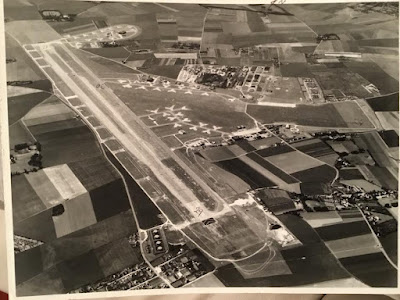
The full extent of RAF Manston before Freudmann sold 300 acres in 2001/2

On the 9th December 2021 Riveroak Strategic Partners posted on their website an attack on, not just the Secretary of State (SoS) for Transport, but the entire redetermination process which I have set out here.

I have added various editors remarks in BOLD as this response seems somewhat biased which seems to be Freudmann's Rottweiler attack dog methods. I believe it is aimed at the supporters rather than any serious attempt to negotiate with the SoS 

"In a covering letter to its response to the Arup Assessor’s report, as part of the redetermination process for the Manston Airport DCO, RiverOak Strategic Partners has set out concerns over not only the content of the Arup Report, but also the “untimetabled and protracted” process of redetermination that the Secretary of State for Transport has presided over – signalling that, had RSP known earlier how poorly the process would be run, it would not have consented to the Secretary of State’s decision to concede.   (Editor's comment, It is past time for RSP to pay up what the judge awarded)

In the letter, submitted on behalf of RSP by its lawyers BDB Pitmans, RSP also expresses its concern that, having withheld the basis on which Arup was commissioned, (Editor's comment, No one was told what the brief was so RSP wasn't disadvantaged however the letter set out the following which is as much as anyone had and to which RSP actually responded


"the Government only revealed the terms of reference under which Arup worked when forced to do so – following a Member of Parliament making a Freedom of Information request. (Editor's note, which was never shared with anyone else)

In the main body of the response, RSP sets out its concerns that, instead of addressing the issue of ‘need,’ Arup produced a narrowly focused demand study, which only considers changes to demand in relation to Covid-19, Brexit and other factors. The unknown authors of the report have focused on issues entirely unconnected to the Judicial Review and redetermination – such as e-commerce, changes to aircraft design, impacts on GDP and national resilience – and have also attempted to consider the issue of ‘viability’ which, in addition to not being an appropriate consideration in this redetermination would have required interrogating RSP’s  business model (editors note, which would have been difficult as RSP have never published it) to do so effectively, which was not done.

The RSP submission argues – and provides evidence to substantiate these arguments – that the Arup report should be given little weight due to a number of other concerning factors too, including:

  • ·         The report’s authors and their qualifications not being identified
  • ·         the inclusion of unsupported assertions and disproven data
  • ·         the report prejudicially dismissing the Applicant’s expert evidence
  • ·         where they agree with RSP, the authors gives the relevant issue little weight
  • ·         the authors unquestioningly accepting opponents’ unevidenced submissions
  • ·         the authors bemoaning a lack of forecasts but then concluding against RSP
  • Editors note, strange that RSP have never published their experts credentials nor who is advising them bar Dr Sally Dixon's initial report which of course she admitted never looked at the viability of her forecasts
  • Inclusion of unsupported assertions is a staple of RSP's reports
  • OVE Arup couldn't had prejudicially dismissed the Applicants expert evidence as Ove had no idea who had provided this evidence
  • All the Aviation expertise provided by their opponents has been evidenced especially ASA and York Aviation. All my submissions have been evidenced in full
  • This is a travesty of a response as the only forecasting has been done by RSP and where a forecast has been provided by the opposition it has been based on extrapolated past factual evidence. RSP have relied almost totally on top down forecasts especially average loads per Cargo ATM which were artificially lowered to ensure 10000 CATMs were achieved 

"Tony Freudmann, Director of RSP, said: “Something about this report and this redetermination process simply isn’t right. Our growing concern is that someone, somewhere is throwing up delays and obstacles while they scratch around for evidence as to why this fully-funded (Editors note, Never have RSP stated who is providing their funds) evidence-based economic regeneration project should not proceed.

“We consented to the Secretary of State’s decision  to concede on the basis that the redetermination process would be efficient and focused on the factors set out in the Secretary of State’s letter. However, the process has taken far too long, has gone far beyond the terms set out in statute and has not been directed to the conceded  issue. Had we known this would happen, we would not have consented to Secretary of State’s decision to concede.

“The re-opening of Manston Airport relies on no public funding (Editors note, Never have RSP stated who is providing their funds) and will represent considerable private, inward investment in existing UK  infrastructure, consistent with the vision of an independent Global Britain. We’ve already invested more than £40 million in this project and the entire risk relating to its  success is borne by RSP and our investors (Editors note, Never have RSP stated who is providing their funds) .

“Despite all of this, we are still here and we remain confident that the reopening of Manston will succeed and will be of measurable benefit to the nation – and, importantly, to the deprived East Kent region.” (Editors note, the issue is one of NEED) 

In the letter, BDB Pitmans also points out the real world implications of the Government’s protracted handling of the process, stating:

“This delay is not taking place in a vacuum, it has real world effects and is prejudicial to the Applicant and the UK economy. It is deterring and confusing investors, particularly from overseas, who had embarked upon their proposal to invest in the UK because of the certainty of timings of the DCO regime but can no longer rely upon it. In general, further, delays mean that responses have to be updated to take into account changes in policy in this field. With every passing day evidence and commentary are published, especially within the trade press for the aviation industry, which further strengthens the Applicant’s position. In addition, even the Department for Transport can be seen to be promoting the UK aviation industry in the trade press.

“Given the current economic uncertainty, the government is surely keener than ever for inward investment into the UK, but through its own actions is making this less likely to happen. The delay also causes an unnecessary harmful local impact (Editors note, Forgetting the decision has to be decided on a Nationally Significant Infrastructure Project basis not just an East Kent basis which would likely damage the East Kent tourist industry, a point conceded by RSP in their original submission. There is no point in robbing Peter to pay Paul) . Employment is more precarious than ever, and has been exacerbated by the end of the furlough scheme, and yet there is undue delay to this development which would bring thousands of high quality construction jobs and more permanent jobs.

“Through no fault of the Applicant, almost two years have passed since the decision was initially due to be taken on 9 January 2020 (Editors note, I would also remind RSP that the DfT paid them £8.5m as compensation for "delaying" their plans) . The application is now in an indefinite decision stage with the prospect of many months more before the decision is retaken. The above points should be given serious consideration and responded to accordingly so as to maintain confidence in this regime, particularly among private inward investors into the UK such as RSP. The supposed certainty of timing of the Planning Act 2008 regime is one of its main strengths for investors and this should not be undermined.”

RSP is now calling on the Secretary of State for Transport to publish a timetable for the redetermination process, as this will at least provide some certainty that a decision will be made shortly. It is assumed that this will be welcomed by both supporters and opponents of the proposals as it will provide much needed certainty for a deprived part of England in desperate need of economic and employment opportunity one way or another.

(Editors note, I would also remind RSP that the DfT paid them £8.5m as compensation for "delaying" their plans) 


Further the following notes have been emailed to me


  • Why is an MP submitting FoI’s on behalf of RSP? 
  •  RSP has sought to interpret ‘need ‘ as ‘benefit’ 
  •  Submissions were invited on ‘changes to need’.  RSP and it’s supporters introduced changes to aircraft design etc etc so no surprise they were picked up by Arup
  •  Submissions by RSP and it’s supporters are littered with ‘unsupported assertions and disproven data’
  •  ‘Little weight’ to what RSP says?  I wonder why?
  •  And the paragraph beginning ‘Tony Freudmann …’ just makes me laugh!
  •  The redetermination programme process Would seem to be focused on the factors set out in the Secretary of States letter rather than RSP’s interpretation of what those letters should be
  •  As for deterring and confusing investors…

Tuesday, 7 December 2021

NEED part 2

 York Aviation have had a intimate relationship with Manston Airport since they wrote a report for Infratil, a previous owner, in August 2010. Their Brief was to determine if Manston could survive if Night Flights were refused.

Their conclusion back then was "It is likely therefore that the full catalytic benefits of MSE (Manston Airport) will only be achieved if a full programme of flying can be provided, which will require night time operations in line with the plan proposed by the Airport."

Move forward through time to the present day and Riveroak's application for a Nationally Significant Infrastructure project and yet again York have been asked to respond to the Ove Arup response for the Department of Transport.

Is Manston Needed and Government policy


Monday, 29 November 2021

Need


This will be my 4th submission to the consultation and will concentrate on NEED and need alone. Notwithstanding the pandemic Cargo air transport movements (CATM) has hardly changed in nature for nigh on 20 years. It is a niche market in the market that moves goods from point A to point B simply because of the cost.

In the original examination report from 2019 (before the pandemic struck) the ExA concluded:

“Given all the above evidence, the ExA concludes that the levels of freight that the Proposed Development could expect to handle are modest and could be catered for at existing airports (Heathrow, Stansted, EMA, and others if the demand existed). The ExA considers that Manston appears to offer no obvious advantages to outweigh the strong competition that such airports offer. The ExA therefore concludes that the Applicant has failed to demonstrate sufficient need for the Proposed Development, additional to (or different from) the need which is met by the provision of existing airports.” (E.R 5.7.28)

Very little has changed and what has changed is debated within the Ove Arup’s report which concludes:

Overall, the Independent Assessor concludes that there have not been any significant or material changes to policy or the quantitative need case for the Proposed Development since July 2019 that would lead to different conclusions being reached (compared with the previous ExA conclusions) with respect to the need for the Manston development. In particular:

1.      The changes to policy, notably the withdrawal and reinstatement of the ANPS and adoption of the Thanet Local Plan, do not significantly change the policy context that was in place at the time of the Examination;

2.      The recent growth in e-commerce sales is not driving a demand for additional runway capacity for dedicated air freighters in the South East;

3.      Although there have been short term changes in the balance between bellyhold freight and dedicated freighter activity during the Covid-19 pandemic, these changes are not expected to be permanent, notwithstanding growth in ecommerce and changes to the UK’s trading patterns post-Brexit;

4.      There is unlikely to be a significant reduction in bellyhold freight capacity (once the passenger market recovers) due to the introduction of narrow-bodied twin-engine aircraft;

5.      Despite the uncertainty concerning the timescale for the Heathrow Airport Third Runway, changes since July 2019 as described do not lead the Independent Assessor to reach a different conclusion on the need case for Manston Airport. East Midlands Airport has sufficient capacity to handle additional dedicated freighter services should the market demand them, while the planning determination at Stansted confirms that significant freight capacity remains available; and

6.      There is no new evidence to suggest a different conclusion should be drawn in respect of the locational performance of Manston compared to East Midlands Airport, and to a lesser extent Stansted, to that of the ExA Report.

What the applicant forgets (sic) is that there is a marked difference between worldwide projections for CATM and those that are UK specific and conflating the two is disingenuous and naïve.

Using forecasts is akin to crystal ball gazing and this seems to be the favourite behaviour of the applicant. To ignore prior statistics in favour of cherry picking forecasts that are not UK specific can lead to erroneous conclusions.

Take the case of a recent report in the Telegraph:

Rocketing shipping costs force businesses to avoid container ships and head to the skies in efforts to avoid freight delays

By Louis Ashworth (Telegraph) 20 November 2021

The headline is misleading because although worldwide shipping costs have “rocketed” in 2020 the volume of CATM in the UK reduced by 21%, a fact that was overlooked in the report that followed.

There were some gems included within the report however:

“However, it comes with a price tag. Estimates by the World Bank suggest air freight is usually four to five times more expensive than road transport, and up to 16 times more than sea. This has typically meant only some products earn a plane ticket: certain fresh foods, time-sensitive documents, pharmaceuticals and cut flowers, for example.”

““There's not a one-size-fits-all response to the current climate,” says Niall van der Wouw, managing director of Clive, an Amsterdam-based air freight data provider. It’s been a boom period for air freight, but sky-high pricing and favourable comparisons with nautical alternatives may not last forever.

“I think there is quite a risk that this big surge in demand that we've seen over the past year could just disappear as quickly as it started,” says James Hookham from the Global Shippers’ Forum, a trade association for cargo owners.

Industry insiders accept that what goes up must come down, although fate may briefly be in the freight firms’ favour. As air passenger levels begin to normalize, cargo space will shrivel.”

What is true is that airfreight is a small niche market which according to Ove Arup has hardly changed in the last 10 years

“Combining these airfreight volumes with data from DfT Port Statistics for unit load cargo passing via sea ports in the same years (cargo in maritime containers, accompanied Heavy Goods Vehicle (HGVs) and unaccompanied trailers) shows that air freight’s market share has effectively remained unchanged over the period 2009 to 2019, at around 1.5%. As illustrated by table 2 below. Overall, sea freight is by far the dominant mode. These modes of shipping are effectively air freight’s ‘competitor’ in the movement of finished consumer cargoes.” (Page 19 OVE Arup)

The essential reason for this is cost airfreight being 16X more expensive that goods shipped by sea. The Steer report clearly understood these facts in their 2018 report as they graphed volume growth which clearly showed a flat line for Freighter only carriage and only a slight rise in bellyhold cargo. Most of the bellyhold is carried in and out of Heathrow which up to the end of 2019 carried 2/3rds of all UK airfreight.

During 2020 with the onset of Covid and the decimation of passenger flights airfreight reduced by 1/5th and with most freight being carried on pure freighters however it is clear from the events in 2021 and the reopening of passenger flights in the UK and worldwide in July that CATM’s are reverting back to their previous pre 2020 configurations.

The 3 main airports for freight in the UK are Heathrow, East Midlands and Stanstead and the respective volumes are in the 2nd pie chart below


So looking at the post Covid figures from the 3 main cargo airports it is clear that from July 2021 the market is reverting back to pre-covid volumes perhaps quicker than even Ove Arup believed in their report

Although Heathrow is still running 6% behind 2019 it is clear that bellyhold is now well ahead of pure freighters with the clear winners being East Midlands and Stanstead with growth of 27% and 22% respectively.

Clearly the number of CATM’s has only markedly changed at Heathrow with pure freighters rising with the fall in bellyhold however 2021 will show that change moving back to a more normal configuration. It is also clear that the applicant hasn’t understood the volume of airfreight has actually reduced by 21% in 2020 despite the growth in E-Commerce. Their assumption is an increase in E-Commerce will lead to an increase in airfreight. Ove Arup’s report states

“Contrary to the propositions above, York Aviation on behalf of Jennifer Dawes seeks to cast doubt on the link between e-commerce and air freight:

“Increases in e-commerce activity, however, do not necessarily lead to an increase in the volumes of air freight carried to or from UK airports. Consumers have long purchased goods made in China for example, which are transported to the UK by both air and surface modes. Even if some goods that were previously bought in physical stores are now bought online, these goods generally share the same journey from China to the UK, but rather than being shipped directly to the retailer’s distribution centre for onward travel to the physical store, they are being shipped to an online retailer’s distribution centre for last-mile dispatch direct to consumers. Therefore, whilst increased e-commerce activity has resulted in an increase in demand for last-mile logistics between distribution centres and consumers, there has so far been a negligible net impact in the volumes of air freight carried to and from UK airports." (paragraph 4.36)

And

When airfreight volumes are compared to the increase in e-commerce there does not appear to be any correlation. Figure 1 below illustrates the percentage change in internet retail sales (£ millions, all sectors) between 2009 and 2020, alongside the percentage change in air freight volumes (total tonnes from all reporting UK airports) over the same time period (page 19 Ove Arup report)

Also within the applicants submission is the rather naïve belief that much of the airfreight is lost to HGVs which take goods to and from airports abroad, this was highlighted in the Steer report as follows


In fact during the period back to 2009-2014 Manston was trading as a Cargo airport yet despite the assertion that London Centric airports were at capacity Manston never grew as a cargo airport. You have to wonder where this naïve belief has come from. In fact most of this trucked cargo could have gone to East Midlands which would have been a quicker and more convenient airport but that never happened either.

East Midlands, Stanstead and Heathrow have combined achieved between 80-90% of all aircargo during the last 10 or so years yet growth has been slow as the graph below shows

Between 2010 and 2019 growth was just 9% with belly hold growing by 17% and pure freighters just 7% and that only with a very big increase in 2017.

Where the applicant finds their figures from isn’t hard to find as they spurn actual figures and would prefer people to view their crystal ball forecasts through rose tinted spectacles.

It is clear from Ove Arup’s report they aren’t convinced the applicant knows what they are talking about however the pro-airport supporters want aviation back at Manston. Many of these supporters will not be affected by the low flying aircraft. They are confused however between the words “Want” and “Need”.

I’d like to quote from the esteemed Ramsgate Society which is made up of people that only wish the best for Ramsgate and the wider East Kent area. They said:

“There is a world of difference between “want” and “need”. Want is about desire and aspiration, Need is something required, where a deficiency causes a clear adverse outcome. There are those in Thanet and beyond, including politicians, whether consciously or otherwise, are content to conflate the two. A “wish” is based on feeling and emotion, “need” is tangible, measureable and evidence based.

The key factor in this (debate) is “Need”

If the DCO is approved and the development goes ahead it will inevitably be a business failure because fundamentally there is no market need, however much sections of the population may wish for airport jobs and cheap convenient continental air travel that will not trump stark commercial realities. The project is being touted on a false prospectus”

There are plenty of White Elephant Airports in Europe, China, and Africa that were built on “Want”.